
Dew Claw Injury: Is It a Vet Emergency? (And Is It Covered by Pet Insurance?)
A clear, step-by-step way to tell if your dog's dew claw injury can wait or needs a vet now — plus what treatment actually costs and how pet insurance fits in.
This post may contain affiliate and partner links, including pet insurance comparisons. If you click through and sign up for something, we may earn a commission at no extra cost to you. See our disclosure for details.
A torn or bleeding dew claw needs same-day vet attention if the bleeding won't stop within a few minutes, the claw is hanging loose, or your dog won't put weight on that paw — a small chip with no bleeding usually isn't urgent. If you're not sure which one you're looking at, the triage table below walks through it, and your vet's phone line is always the safer tiebreaker.
[PERSONALIZE: if you or a reader has actually been through this — what you saw, what the vet said, what it cost — two or three honest sentences here will do more than the rest of this intro combined.]
For the basics on what a dew claw is and why some dogs have them and others don't, see our dew claw explainer — this article picks up specifically where that one leaves off: what to do once an injury has actually happened.
Quick Triage: Wait, Call, or Go Now?
| What you're seeing | What it usually means | What to do |
|---|---|---|
| Small chip or rough edge at the very tip, no bleeding, dog walking normally | Minor wear or a shallow chip | Monitor; mention it at your next routine vet visit |
| Light bleeding that slows within a few minutes of gentle pressure | A minor split, possibly into the outer nail only | Clean and bandage at home; call your vet if it reopens or your dog keeps bothering it |
| Bleeding that won't slow after 5-10 minutes of steady pressure | Likely into the quick (the nail's blood/nerve supply) | Call your vet today; same-day visit recommended |
| Claw visibly bent, twisted, or hanging by a thread of tissue | Partial avulsion (the nail is torn loose from the nail bed) | Vet visit today — this needs proper removal and pain control, not a DIY finish |
| Swelling, discharge, odor, or fever a day or more after an injury | Possible infection setting in | Vet visit as soon as possible |
| Heavy bleeding that won't stop, or an oddly angled/swollen toe (not just the nail) | Possible fracture or a wound that needs immediate care | Emergency vet now |
This table is a starting point for triage, not a diagnosis. If you're genuinely unsure which row you're in, call your vet or a local emergency line and describe what you're seeing — that's exactly what they're there for, and it costs nothing to ask.
How to Examine the Injury Safely
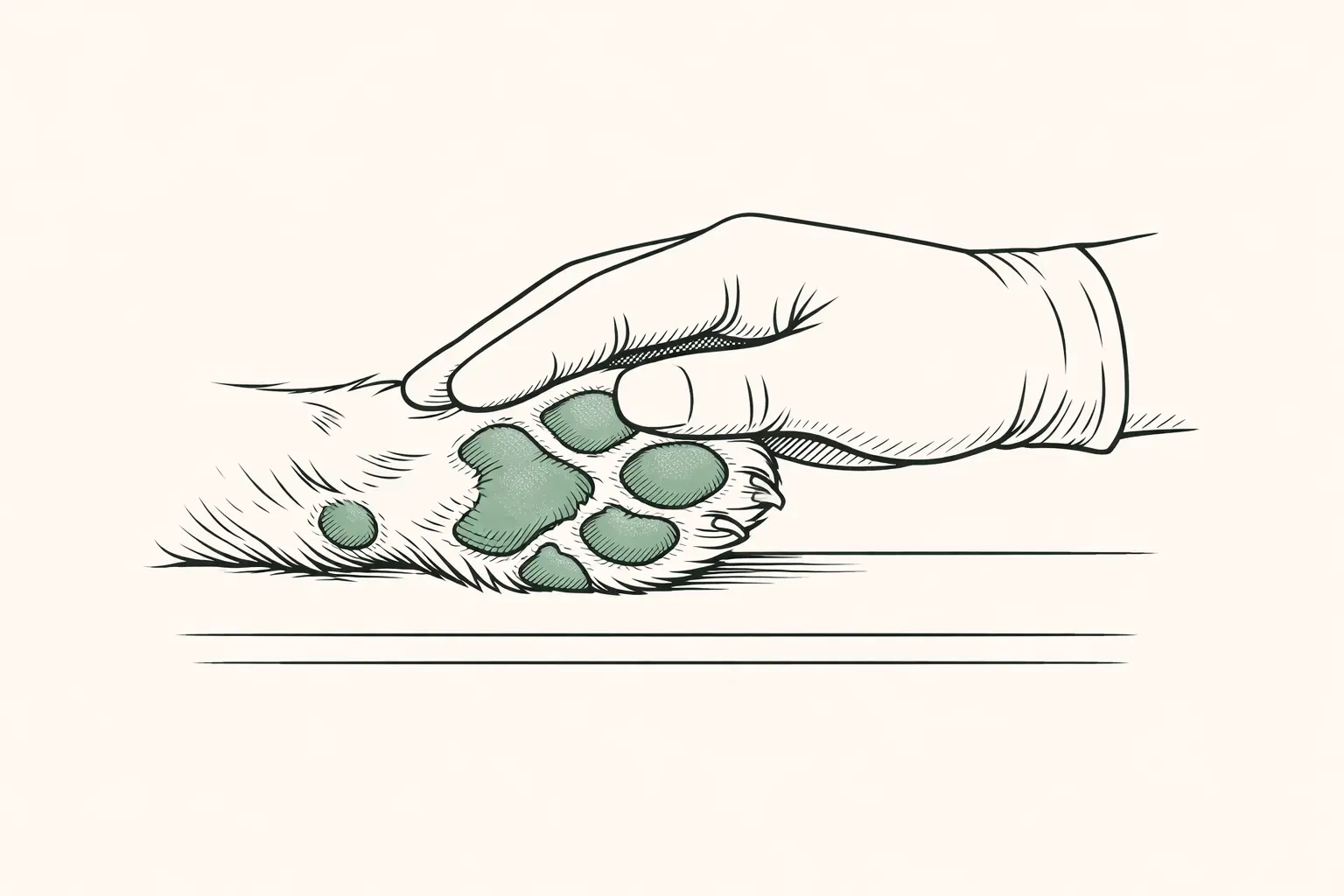
A dog in pain — even a dog who's never bitten anyone — can snap reflexively if a sore paw is handled wrong. Approach calmly, speak in a normal, steady voice, and let your dog see and sniff your hand before touching the paw. Support the leg from above rather than grabbing the paw itself, and look rather than poke: you're checking whether the nail is intact, whether there's active bleeding, and whether your dog pulls away sharply when you get close to the dew claw specifically versus the paw in general. If your dog is showing any sign of wanting to bite (stiffening, growling, whale eye), stop and let a vet handle the exam — that's not a fight worth having at home.
First Aid: What To Do in the First 10 Minutes
- Keep your dog still and calm. Movement and stress both make bleeding worse. A towel draped over your dog's shoulders can have a surprisingly calming effect.
- Apply firm, steady pressure with a clean cloth, gauze, or even a clean sock directly over the injured claw for a full two minutes before checking — resist the urge to peek every few seconds, which restarts the clotting process.
- If bleeding continues past 5-10 minutes of steady pressure, keep the pressure on and call your vet or emergency line while you're doing it, rather than waiting until you stop.
- Don't try to finish removing a torn claw yourself, even if it looks like it's barely attached. It's more painful and more prone to incomplete removal than it looks, and your vet has proper pain control for it.
- Stop your dog from licking or chewing the area with a temporary sock, soft bootie, or e-collar if you have one on hand — saliva and dirt both raise infection risk.
What Happens at the Vet Visit
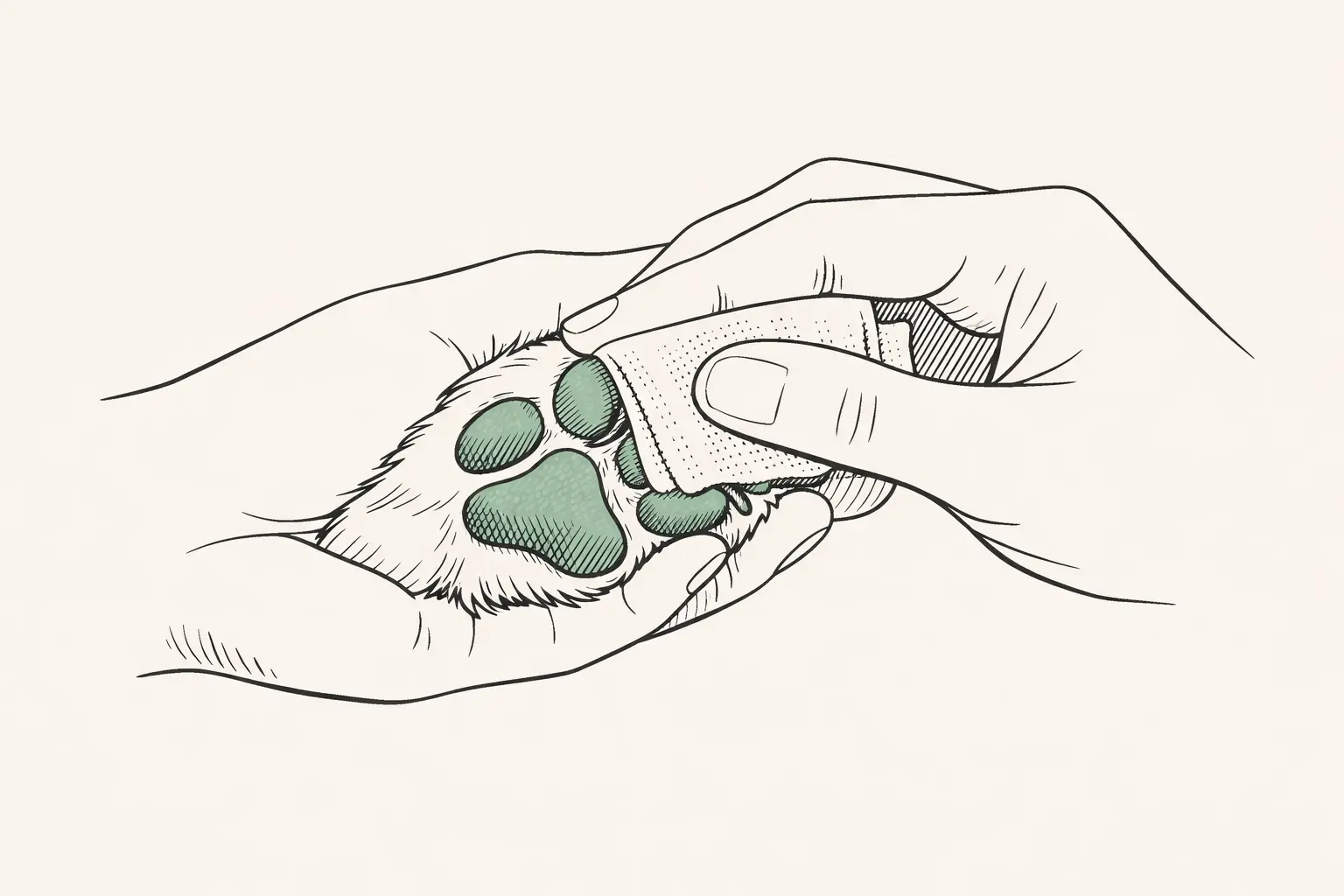
Most dew claw injury visits follow a similar pattern. Your vet will examine the paw, often gently flexing the toe to check for a fracture versus a soft-tissue-only injury, and will usually want to see the claw's attachment point clearly, which sometimes means a quick clip or trim of the damaged portion. If the injury is into the quick or the claw is partially detached, mild sedation or a local nerve block is common — not because vets are being cautious for no reason, but because this area is genuinely sensitive and a calm, still patient heals better and is safer to work on. An X-ray may be recommended if a fracture of the toe bone itself (not just the nail) is suspected. You'll likely go home with a light bandage, instructions for keeping the area dry and clean, and possibly a short course of antibiotics or pain relief depending on severity.
How Much Does It Actually Cost?
Costs vary a lot by region, clinic, and how severe the injury is, but here's a realistic range based on what's typically reported across vet-cost sources:
- Straightforward in-office repair (exam, trim/correction, bandaging, no sedation): roughly $50-150
- With sedation or a local block (common for injuries into the quick or a partially detached claw): often $150-300+ once medication is added
- X-rays, if a fracture is suspected: typically $75-400 depending on the clinic and number of views needed
- Surgical removal of a severely or repeatedly damaged dew claw: can run several hundred dollars more, particularly if full anesthesia is used
For context on the higher end: one pet insurer's published claim example showed a torn nail exam-and-treatment visit totaling around $540, the kind of bill that sits squarely in "ouch, but not catastrophic" territory for most households — which is exactly the range pet insurance tends to make the easiest to absorb.
Is This Covered by Pet Insurance?
Generally, yes — a torn, broken, or infected dew claw is an accidental injury, and accidental injuries are core coverage for standard accident-and-illness pet insurance plans, not an add-on. A few things determine whether your specific bill would actually be reimbursed:
- Waiting periods. Most plans have a short waiting period (commonly a few days to two weeks) after you sign up before accident coverage becomes active. An injury that happens during that window typically isn't covered.
- Pre-existing conditions. If your dog has a documented history of repeated dew claw injuries before you got the policy, that specific issue may be excluded going forward, even though a new, unrelated injury would still be covered.
- Deductible and reimbursement rate. Most plans reimburse a percentage (commonly somewhere in the 70-90% range) of the vet bill after your annual deductible is met, not the full amount from dollar one.
- Routine vs. injury care. Routine nail trimming is essentially never covered by any plan — this is specifically about accidental injury, infection, or a vet-recommended surgical removal due to recurring trauma, not everyday grooming.
If a bill like the one above has you thinking it might have been worth having coverage in place beforehand, our pet insurance comparison walks through what a few major providers actually cover for nail and paw injuries, what their waiting periods look like, and roughly what you'd pay in premiums versus what you'd get back on a claim like this one.
Recovery and Aftercare
Most dew claw injuries heal within two to three weeks with basic aftercare: keeping the bandage (if any) clean and dry, following any e-collar instructions to stop licking, finishing the full course of antibiotics if prescribed even if the paw looks fine after a few days, and keeping activity light — short, calm leash walks rather than off-leash running — until your vet gives the all-clear. A claw that was torn out at the base will regrow over several weeks to a couple of months and may look slightly different in shape than before; that's normal and not usually a sign of a problem.
Watch for these signs during recovery and call your vet if you see them: increasing swelling instead of decreasing, new or worsening discharge, a smell from the bandage, or your dog suddenly favoring the leg again after initially improving.
How to Prevent This From Happening Again
Most dew claw injuries come down to one of two things: an overgrown claw that catches more easily, or a genuinely loose ("floppy") rear dew claw on an active dog. Our dew claw guide covers the everyday trimming routine that prevents the first cause, and the front-vs-rear attachment differences that explain the second — worth a read if this is the first injury, not the last, you've dealt with.
Frequently Asked Questions
Is a torn dew claw always an emergency?
Not always. A small chip with no bleeding can usually wait for a routine visit. A claw that's actively bleeding heavily, hanging loose, or causing your dog to avoid putting weight on the leg needs same-day care. When in doubt, call your vet and describe what you're seeing.
Can I cut off a hanging dew claw myself to "finish the job"?
No — this is more painful than it looks and risks an incomplete, ragged removal that's more likely to get infected. Even if the claw looks like it's barely attached, leave the final removal to your vet, who can do it cleanly with proper pain control.
How long does a torn dew claw take to heal?
Most cases heal within two to three weeks with basic aftercare. A claw that was torn out completely will regrow over a longer period, often several weeks to a couple of months, and may look slightly different in shape than it did before.
Will pet insurance cover a dew claw injury that already happened?
Generally no — coverage applies going forward from when your policy's waiting period ends, not retroactively to an injury that's already occurred. This is exactly why pet insurance is usually worth considering before an accident happens, not after.
Does every pet insurance plan cover nail and dew claw injuries the same way?
No — coverage details, waiting periods, and reimbursement percentages vary by provider and plan tier. Comparing a few options directly is the most reliable way to know what you'd actually get back on a bill like this.
This article is for general information and isn't a substitute for veterinary advice. If you're ever unsure whether your dog's injury needs urgent care, contact your vet or a local emergency animal hospital directly.
Related reading: Dew Claw Explained: What It Is and When to Worry · Ingrown Cat Claw: Symptoms and Care · Compare Pet Insurance for Nail & Paw Injuries