
Dew Claw Explained: What It Is and When to Worry
What a dew claw actually is, why some dogs have them and others don't, and the clear signs that tell you whether an injury can wait or needs a vet today.
This post may contain affiliate and partner links. If you click through and sign up or buy something, we may earn a small commission at no extra cost to you. See our disclosure for details.
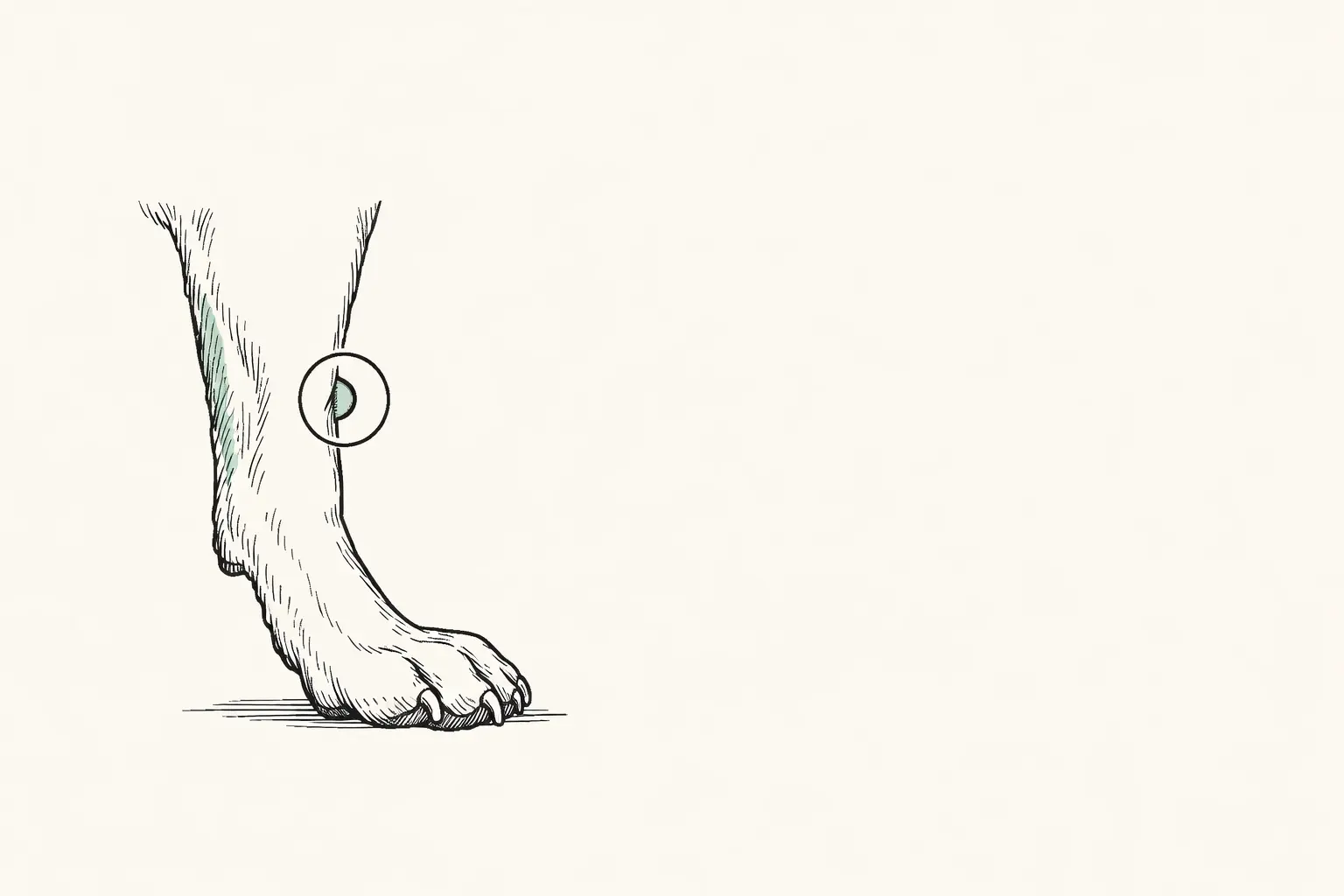
A dew claw is the small, higher-set nail on the inside of a dog's leg that doesn't touch the ground — most dogs have one on each front leg, some have them on the back legs too, and on its own it's completely normal. The short version of when to worry: a chipped tip with no bleeding can usually wait, but a torn, dangling, or actively bleeding dew claw needs a vet visit the same day.
I can still feel that sick sensation in my stomach when Buster came lumbering back from a walk through the weeds in the brush. His front dew claw was twisted up and torn, looking nasty! My heart nearly jumped out of my chest but after a fast drive to the vet where they neatly cut off the jagged claw, bandaged it, and gave him something to take the edge off of the pain, Buster was as good as new.
What Exactly Is a Dew Claw?
A dew claw is a digit on your dog's leg, positioned higher up than the rest of the foot, so it never makes contact with the ground when your dog walks or runs. Most dogs are born with two dew claws — one on each front leg — and like the other toes, a dew claw on the front leg usually has its own set of bones, nerves, and a nail, and is firmly attached to the leg the same way the other toes are.
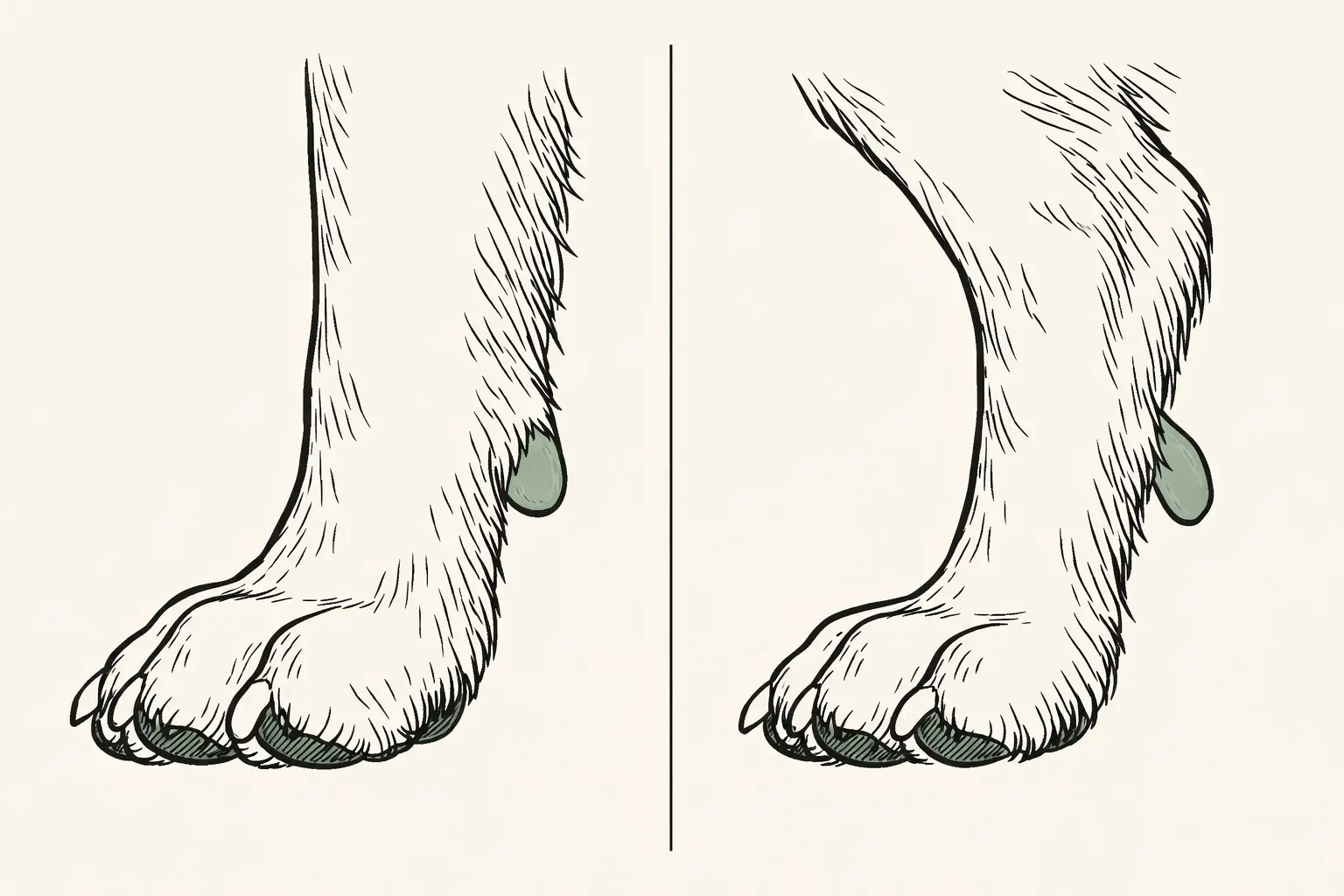
Some dogs also have dew claws on their back legs, and this is where things get more variable. Rear dew claws are far less consistent across dogs: in many cases they're attached only by skin or a small tendon, with no bone connection at all, which is one of the reasons they behave differently from front dew claws when it comes to injury risk (more on that below). A few breeds — the Great Pyrenees is the best-known example — are actually expected to have double rear dew claws as part of their breed standard.
Do Dew Claws Actually Serve a Purpose?
Despite sometimes being called "vestigial," front dew claws genuinely do work. Dogs use them for grip and stability when running at speed and turning sharply, for traction when climbing, and for holding onto objects like a chew toy or bone — functioning a little like a built-in thumb. This is one reason most vets are cautious about removing front dew claws without a specific medical reason: they're not just decorative.
Front vs. Rear Dew Claws — Why the Difference Matters
This distinction matters more than most owners realize, because it changes both injury risk and what a vet is likely to recommend.
Front dew claws are bone-attached and structurally part of the leg, the same way your dog's other toes are. They're sturdier, less prone to catching on things, and are rarely removed unless there's a recurring injury problem.
Rear dew claws, when present, are often attached by skin or a thin tendon only — sometimes described as "floppy." That looser attachment makes them noticeably more likely to snag on carpet, fences, or undergrowth during a run, and it's part of why some vets recommend removing rear dew claws in puppyhood for dogs with a history of catching them, particularly active or working breeds. This is always a case-by-case conversation with your vet, not a default recommendation for every dog.
When a Dew Claw Becomes a Problem
A dew claw sitting quietly on your dog's leg isn't something to worry about. A few specific situations are, though:
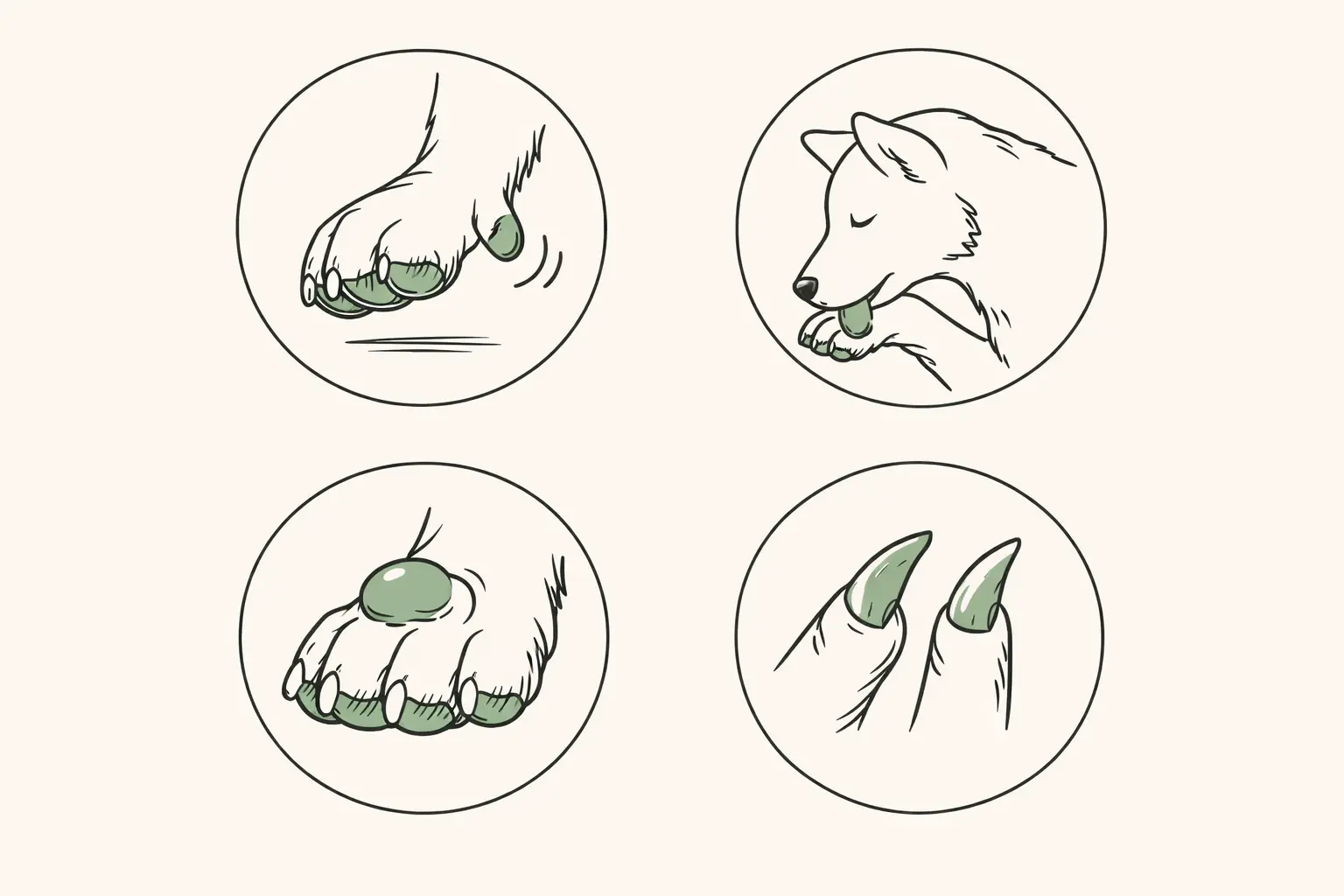
- Overgrown dew claws. Because a dew claw never touches the ground, it doesn't wear down naturally the way your dog's other nails do. This is especially common in less active dogs. Left untrimmed for long enough, an overgrown dew claw can curl around and grow into the pad itself, which is painful and prone to infection.
- Torn or broken dew claws. The same looser positioning that makes dew claws useful for grip also makes them easy to catch — on carpet fibers, fences, thick brush, or another dog during play. A torn dew claw is one of the more common nail injuries vets see.
- Infection. Usually follows an injury that wasn't kept clean, or an overgrown claw that's pressed into the pad for too long.
Is a Dew Claw Injury a Vet Emergency?
This is the question most people actually land here for, so here's the direct breakdown. This is general information, not a diagnosis — when in doubt, a quick call to your vet (or an emergency vet line if it's after hours) costs you nothing and is always the safer move.
Probably fine to monitor, vet at the next routine visit:
- A small chip or split at the very tip of the nail
- No bleeding, and your dog is walking normally on it
See a vet the same day:
- Bleeding that doesn't stop within a few minutes of gentle, clean pressure
- Your dog won't put weight on that leg, or is licking/chewing at it repeatedly
- The claw looks dislocated, twisted, or is hanging on by a thread of tissue
- Visible swelling, discharge, or an odor a day or two after a known injury — signs of possible infection
Treat as an emergency:
- Heavy bleeding that doesn't slow with pressure
- A suspected broken bone in the toe itself (not just the nail) — usually shown by severe pain, swelling, or an oddly angled toe
- Your dog is in obvious, ongoing distress
If you're ever unsure which category you're in, default to calling your vet. Dogs are good at hiding pain, and a "probably fine" injury that's actually infected can get worse fast if it's left alone.
Basic First Aid While You Get to the Vet
If there's bleeding, apply gentle, steady pressure with a clean cloth or gauze — most minor nail bleeding slows within a few minutes. Keep your dog as calm and still as possible; a stressed dog's heart rate working against you can prolong bleeding. If the claw is visibly torn but still partially attached, don't try to finish removing it yourself — that's a job for your vet, who can do it cleanly and with proper pain control. A loose sock or a cone collar can help stop your dog from licking or chewing the area on the way to the clinic.
Everyday Dew Claw Care (Prevention)
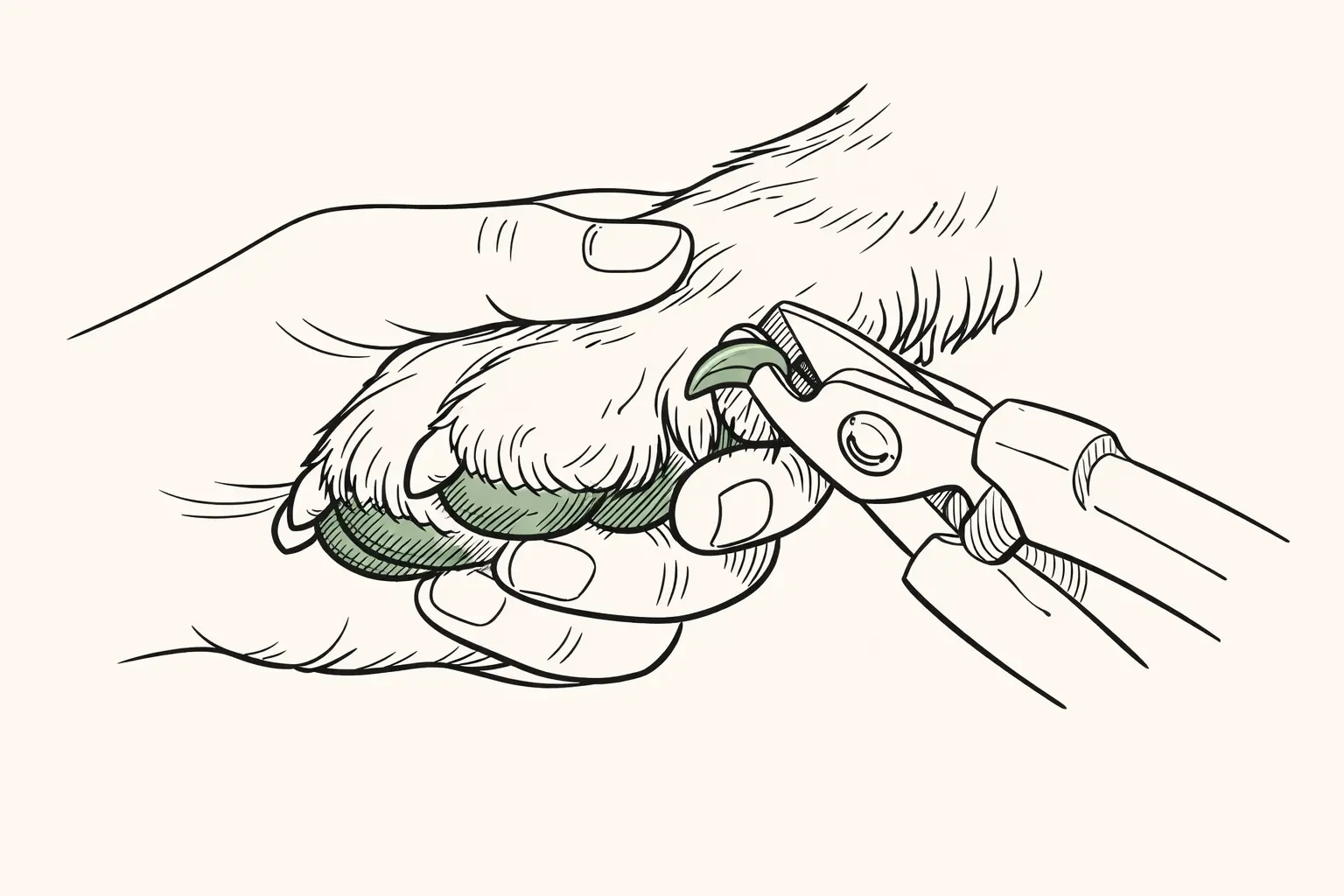
Because a dew claw doesn't naturally wear down, it needs the same regular attention you'd give your dog's other nails — arguably more, since it's easier to forget about a nail that's tucked higher up the leg and out of the way. A quick check every time you trim your dog's regular nails is usually enough to catch a dew claw getting too long before it becomes a real problem. If your dog is anxious about traditional clippers, a quiet cordless nail grinder can make the dew claw specifically easier to manage, since you can go slowly and stop the moment your dog gets uncomfortable.
Should You Remove a Dog's Dew Claws?
This is a decision to make with your vet, not a default either way. Front dew claws are generally left alone, since they're structurally part of the leg and genuinely useful. Rear dew claws — particularly the "floppy," skin-attached kind — are sometimes removed in puppyhood for dogs at higher risk of repeated injury, such as very active or working breeds, but plenty of dogs go their whole lives with healthy rear dew claws and never have an issue. If your dog has had more than one dew claw injury, it's a reasonable thing to bring up at your next vet visit.
What About Cats, Rabbits, and Other Pets?
Dew claws aren't just a dog thing — cats and rabbits have them too, and the same basic care principle applies: they don't wear down on their own, so they need regular checking and trimming. If you're working through claw care for a cat specifically, our cat claw care guide covers the differences in more detail.
Is Dew Claw Injury Treatment Covered by Pet Insurance?
Accident-related injuries like a torn or broken dew claw are commonly covered under standard accident-and-illness pet insurance plans, though exact coverage, waiting periods, and any breed- or pre-existing-condition exclusions vary by provider and by when you signed up — coverage for an injury that happens before a policy's waiting period ends typically won't apply. If a dew claw tear has you thinking about whether insurance would have softened the vet bill, our pet insurance comparison walks through what a few major providers actually cover for nail and paw injuries.
Frequently Asked Questions
What is a dew claw exactly?
A dew claw is the small, higher-set nail on the inside of a dog's leg that doesn't touch the ground when they walk. Most dogs have one on each front leg; some also have one or two on the back legs, depending on breed.
Do all dogs have dew claws?
Almost all dogs are born with front dew claws. Rear dew claws are less universal — some dogs have them, some don't, and a handful of breeds, like the Great Pyrenees, are bred to have double rear dew claws as a breed standard.
Is it normal for a dew claw to bleed a little when trimmed?
A small amount of bleeding can happen if you trim slightly into the quick, the same as with any other nail. Light pressure with a clean cloth for a few minutes should stop it. If bleeding continues past that or seems heavy, call your vet.
Can a torn dew claw heal without stitches?
It depends on how severe the tear is. Minor splits at the tip often heal on their own with basic care, while a claw that's torn at the base or hanging loose usually needs a vet to clean, trim, and sometimes stitch the area to heal properly and avoid infection.
Should I have my puppy's rear dew claws removed?
This depends on your dog's breed, activity level, and how the dew claw is attached, and it's best decided with your vet rather than as a routine default. Many dogs keep healthy rear dew claws for life with no issues at all.
This article is for general information and isn't a substitute for veterinary advice. If you're ever unsure whether your dog's dew claw needs urgent care, contact your vet or a local emergency animal hospital.
Related reading: Dew Claw Injury — Is It a Vet Emergency? · Ingrown Cat Claw: Symptoms and Care · Compare Pet Insurance for Nail & Paw Injuries